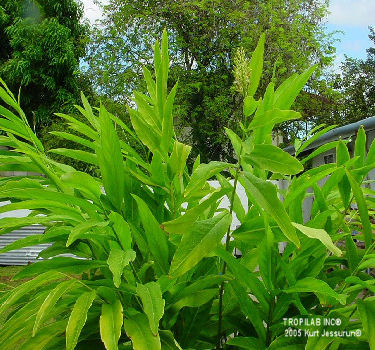
 Galanga (Alpinia galanga), the rhizome is extensively used medicinally. It is aromatic and carminative; the effects are
similar to Ginger.
It is also used extensively as a spice in the Asian cuisine.
Galanga (Alpinia galanga), the rhizome is extensively used medicinally. It is aromatic and carminative; the effects are
similar to Ginger.
It is also used extensively as a spice in the Asian cuisine.
The red fruit is used in Traditional Chinese Medicine.
Since Galanga possesses tonic antiviral and antibacterial qualities, it is also used for these properties in veterinary and
homeopathic medicine.
It has medicinal effects since it promotes digestion and alleviates respiratory diseases and most stomach problems.
Active Ingredients
Galangal rhizome contains: 0.5-1.0% volatile oil containing sesquiterpenes and alcohols
together with a small amount of eugenol; pungent substances formerly called galangol containing diarylheptanoids;
gingerol; flavonoids including quercetin and kaempferol; sterols and steroidal glycosides (ß-sitosterol
diglucosyl caprate), sodium, iron, vitamins A and C.
Beta-Sitosterol, Galangin, Emodin.
Pharmacology
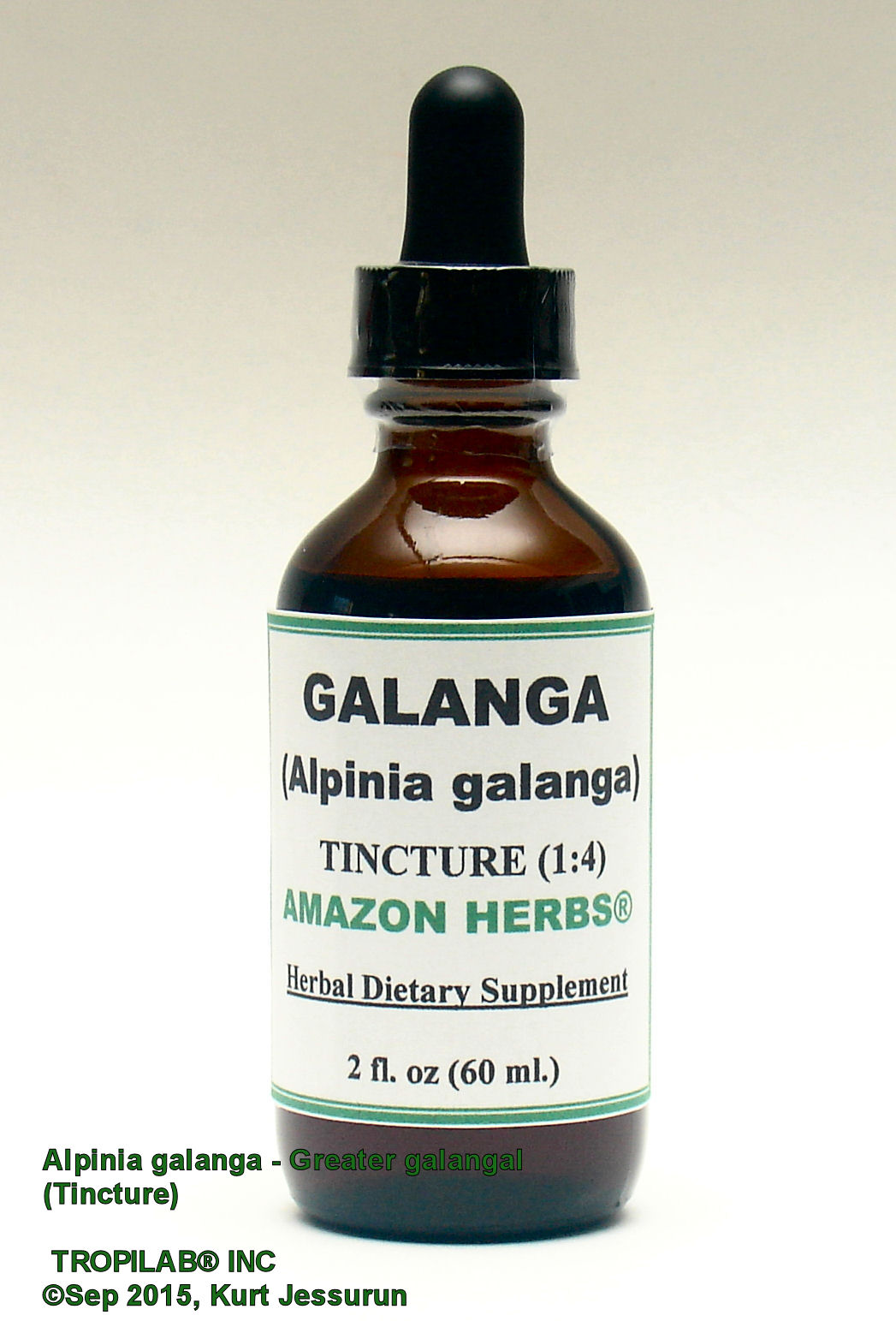 The Gastric antisecretory, antiulcer and cytoprotective properties of ethanolic
extract of Alpinia galanga are impressive.
The Gastric antisecretory, antiulcer and cytoprotective properties of ethanolic
extract of Alpinia galanga are impressive.
The effect of Alpinia galanga extract has been studied on induced gastric ulcers. The ethanolic extract significantly
reduced the intensity of gastric mucosal damage induced by pyloric ligation and hypothermic restraint stress. It
produces a significant decrease in gastric secretion and has a highly significant cytoprotective effect.
Pretreatment with the extract significantly prevented hypothermic stress-induced gastric wall mucus depletion. These
findings suggest that a significant antisecretory and cytoprotective action of Galanga may be responsible for its
antiulcer activity.
The rhizome of Alpinia galanga is widely used in the Ayurvedic system of medicine in the treatment of various
inflammatory diseases, diabetes mellitus and obesity.
The hypolipidemic action of the ethanolic extract of this plant was studied. Oral administration of the extract effectively
lowered the serum and tissue levels of total cholesterol, triglycerides, phospholipids and significantly increased the serum
levels of high density lipoproteins (HDL). The results are indicative of these plants in various lipid disorders
especially atherosclerosis.
Galanga kills cancer cells and protects healthy cells from becoming cancerous; this is a dual benefit that is rare
among cancer treatments.
An isolated chemical (Galangin (3,5,7-trihydroxyflavone), made from the galangal root killed three times more cancer
cells than healthy cells. Among cells damaged by the chemical galangal extract, negative effects were reversible.
Traditional Usage
Anorexia, Antibacterial, Antifungal, Anti-inflammatory, Antioxidant, Antispasmodic, Antiviral, Bile
Stimulant, Catarrh (mucous), Cleansing, Detoxification, Digestive Disorders, Dyspepsia, Gastrointestinal Disorders (is considered to
be very effectively in aiding digestive problems, dyspepsia, stomachache and thus helps in normalizing the digestive process),
Indigestion, Vascular Disorders.
Homeopaths use Galanga as a natural digestive stimulant.
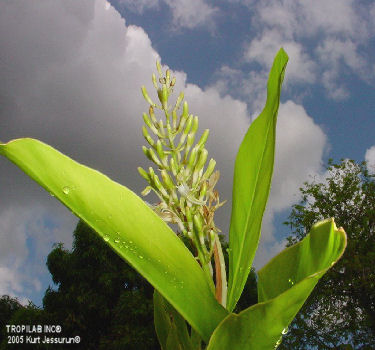
For more information on Galanga, go to the "Alpinia galanga plant" page.
 Dosage
Tincture: 1 - 3 ml. daily
Infusion (herbal tea): 1 - 2 cups daily
The tea is naturally caffeine free.
Precaution
Do not take Galanga if you have a long-term problem with your gastrointestinal tract
(stomach and/or intestines)
Reference
Preliminary study of antimicrobial activities on medicinal herbs of Thai food ingredients.
S. Chaisawadi, D. Thongbute, W. Methawiriyasilp, N. Pitakworarat, A. Chaisawadi, K. Jaturonrasamee,
J. Khemkhaw, W. Tanuthumchareon
Constituents from seeds of Alpinia galanga Wild, and their anti-ulcer activities.
Mitsui S, Kobayashi S, Nagahori H, Ogiso A.
Toxicity studies on Alpinia galanga and Curcuma longa.
Qureshi S, Shah AH, Ageel AM.
Analysis of the essential oils of the leaves, stems, rhizomes and roots of the medicinal plant Alpinia galanga
from southern India.
Jirovetz L, Buchbauer G, Shafi MP, Leela NK.
Institute of Pharmaceutical Chemistry, University of Vienna, A-1090 Vienna, Austria.
leopold.jirovetz@univie.ac.at
The above presentation is for informational and educational purposes only.
It is based on scientific studies (human, animal, or in vitro), clinical experience, or traditional usage.
For many of the conditions discussed, treatment with prescribed (RX) or over - the - counter medication (OTC) is also available.
Consult your doctor, practitioner, and/or pharmacist for any health problem and before using dietary supplements
or before making any changes in prescribed medications.
|


)
)
)