 |
|
 |
| Follow us online |
 |
 |
|
HYPERTENSION Alternative Treatments and Prevention from AMAZON HERBS® 
|
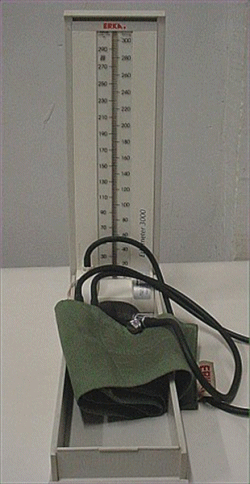 Hypertension (high blood pressure) often goes unnoticed and
if left untreated, can rise to even higher
levels. This can lead to other ailments such as kidney failure, heart disease, stroke and cardiovascular disease.
Hypertension (high blood pressure) often goes unnoticed and
if left untreated, can rise to even higher
levels. This can lead to other ailments such as kidney failure, heart disease, stroke and cardiovascular disease.It is a serious condition affecting over 50 million people in the USA alone. Although the underlying cause of hypertension still largely remains unknown, the chance of developing high blood pressure is due to certain factors. When the cause is unknown we refer to primary (essential) hypertension, if the cause is known, we talk about secondary (treatable) hypertension. Heredity, gender, age, obesity, diet style, alcoholic consumption and inactive life style are the main causes. Blood pressure is the natural pressure caused by blood pumping through the arteries and veins in the human body. This pressure is measured in millimeter mercury pressure (mm. Hg) and is reported by two numbers. The top - or first number represents the number when the heart beats, pumping blood in the arteries (highest pressure). It is called the systolic reading. The bottom - or second number is the number when the heart is at rest between beats; this is called the diastolic reading (pressure drops to its lowest point). Every one experiences fluctuations in their blood pressure but hypertension is diagnosed when the blood pressure rises to levels that are potentially dangerous. Hypotension A reading too low (below 90/60) can also affect the health since it can lead to oxygen deprivation of the brain. Extremely low pressures are often the result of trauma, excessive blood loss or severe hydration. Any of these will cause the blood pressure to go as low as 60/40. |
|
||
|
| |
|
| |
|
| |
|
| |
|
| |
|
| |
|
| |
|
Symptoms of high blood pressure
There are several symptoms that hypertension may cause: According to new studies, once your blood pressure rises above 115/75 millimeter of mercury (mm. Hg) the risk of cardiovascular complications starts to increase. High blood pressure also can damage the kidneys, eyes and brain. The most important thing is to lower the blood pressure to normal levels. )
To achieve this, you will have to get control of your blood pressure. First, let your physician determine if you have high blood pressure. This involves a complete physical exam and may include an ECG (electrocardiogram), echocardiogram and chest x-ray. Based on the findings, the physician will initiate a program with the goal of lowering your high blood pressure by adapting a healthier lifestyle. This will include, but is not necessarily limited to, exercising and losing weight, eating a balanced diet, quitting smoking, reducing stress. He or she may also prescribe medications (such as diuretics, beta blockers, ACE inhibitors, calcium, channel blockers and angiotension 2 receptor antagonists) and/or the use of herbal dietary supplements (botanicals). The problem is that the overwhelming majority of MD’s do not know much about the use of botanicals and that prescription drugs do not address the underlying cause of the hypertension. One should realize that there is a clear connection between hypertension and insulin resistance (type 2 diabetes). In many cases normalizing blood sugar levels will also in most cases, bring the blood pressure under control. When being overweight, even shedding a few pounds will lower the blood pressure. Dietary Approach Most people who have hypertension can normalize their blood pressure. Actually this means a change in lifestyle; going on a crash diet only works for so long. Life-style plays a very important role in causing and maintaining hypertension. It is quite well possible to treat high blood pressure without drugs. A healthy diet, low in fat - and fat dairy foods, high in vegetables, fruits and fiber can lower the blood pressure in a short time. Include also fresh garlic or onions in your diet; it has many benefits. Among other, it lowers blood pressure. When using fats, use mono - saturated fats such as olive - and sesame oil. Other factors in a dietary approach are a healthy weight, foods low in salt (max. 2 grams of sodium/day)*, no - or moderate alcohol use. A well balanced diet, low in carbohydrates (carbs), should have all the minerals and vitamins the body needs. Combined with (strenuous) exercise, this can give astounding results. If necessary, herbal dietary supplements can be taken to help lowering blood pressure to safe levels. Avoid red meat and purine–rich foods; they can raise the uric acid level which drives up the blood pressure. Also avoid sugar, which drives up the uric acid level even more. Uric acid increases the blood pressure. Hypertension and the Elderly Research show that half of the persons of age 65 and over, will have hypertension. In many cases there is an isolated systolic hypertension or ISH (only the systolic blood pressure is elevated) but the diastolic pressure remains normal. This increases the risk of stroke and other conditions. * Not everyone with hypertension is salt sensitive; about 30 to 40 percent of the population is sensitive to salt. If you have heart- or kidney problems in addition to high blood pressure, you should definitely avoid salt. Treating Hypertension with Herbal Dietary Supplements Hypertension & Botanicals There are numerous herbal dietary supplements, many of these from the Amazon rainforest, which can have a positive effect in lowering high blood pressure. First, always consult your doctor before starting to use these, especially when you are already on medication aimed at lowering an elevated blood pressure. Contrary to the more than 100 synthetic drugs (most of them not very effective and with potentially serious side effects) used in controlling hypertension; these botanicals have no - or very few side effects. Anato (Bixa orellana)  Banaba (Lagerstroemia speciosa)
Bitter melon (Momordica charantia) Bitterwood (Quassia amara) Coffee senna (Cassia occidentalis) Curcumin (Curcumin xanthorriza) Garlic (Allium sativum) Ginger (Zingiber officinale) Holy basil (Ocimum sanctum) Noni (Morinda citrifolia) Phyllanthus species (P. Amarus & P. Urinaria) Roselle (Hibiscus zabdariffa) Soursop (Annona muricata) Sweet broom (Scoparia dulcis) Trumpet tree (Cecropia palmata) |