 |
|
|
JATROPHA CURCAS - PHYSIC NUT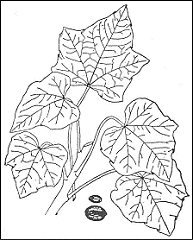 Common names
Arandi, physic nut, Barbados nut, purging nut, pignon d'inde, kuikui pake, jarak pagar, bakrenda, yu lu tzu, habel meluk, biodiesel tree, purgeernoot, médicinier, noix de medicine, bhagrenda, purgiernusz, kattamanakku, tuba tuba, frailejón, piñón, piñón blanco, ba dau me, fagiola d'India, mundubi assu, yu lu tzu, big-purge nut, tubang-bakod, pinhão de Purga, pinhão de paraguai. Family Euphorbiaceae (Spurge family). Overview Jatropha curcas is a tree native to Central America and the Caribbean region and growing also abundantly in Suriname. Physic nut is a drought resistant shrub or small tree with a gray bark that grows up to 20' tall (under favorable conditions) with spreading branches. It has yellow-green flowers and large heart - shaped (pale) green leaves, arranged alternately. The inflorescence is formed in the leaf axel; flowers are formed terminally, individually, with female flowers usually slightly larger. There are male - and female plants of this plant and pollination is done by insects (bees). The seed pod (a three, bi-valved cocci) contains 2 - or 3 large black, oily seeds. These seeds, about 2½ cm. long, become mature when the fruit changes from green to yellow. ) The black, thin shelled seeds are considered toxic; they contain the toxalbumin curcin and this
makes them fatally toxic; there are however non toxic varieties. Roasting the seeds though seems to
kill the toxic.
The black, thin shelled seeds are considered toxic; they contain the toxalbumin curcin and this
makes them fatally toxic; there are however non toxic varieties. Roasting the seeds though seems to
kill the toxic.However, they also contain a high percentage of clean oil used for candles, soap and biofuel production. Physic nut has insecticidal - and fungicidal properties; it has latex that contains an alkaloid (jatrophine) which shows anti-cancerous properties. The constituents are: alkaloids, tannins, sapogenins, ethereal oils, toxalbumins and cyanogenic compounds. Caution is advised when using physic nut! ) When properly irrigated, the plant procedures seeds during almost the whole year (in tropical regions
with high humidity).
When properly irrigated, the plant procedures seeds during almost the whole year (in tropical regions
with high humidity).In drier regions there are 2 peaks in seed production. The seeds contain about 37% of this non edible oil; it is used in the production of biodiesel (see also bio-diesel production in Suriname). Suriname's traditional medicine The leaves of this plant are used against stomachache; when diagnosed in children: boiled leaves for conditions of the gums and throat; tea of the leaves for stoppage of urine, constipation, backache and inflammation of ovaries. Visit our: Biodiesel - and Tincture page for more information on Jatropha for fuel manufacturing and medicinal applications! Hardiness USDA zone 9 - 11. Propagation Seeds and cuttings. Culture Full sun, well drained soils but grows on almost any soil, such as sandy - saline. It does not need much water; is resistant to long periods of drought and can withstand short spells of light frost. The tree may produce fruits and seeds for over 35 years. How to grow your own biodiesel tree! ) The seeds germinate easy (7 - 14 days) in organic mix soil with good
moisture.
The seeds germinate easy (7 - 14 days) in organic mix soil with good
moisture.The high quality viable seeds we sell, have a germination rate of 90% or higher. The seeds stay viable for up to 12 months but the germination rate may drop to 80% after 6 months. (See also the germination page: www.tropilab.com/germinationseeds.html). |
For the right freight rate, shipping charges, conditions and delivery service, please visit our Webstore page! |